

FOOD PROVIDED HUE - QUALITY IN FOOD
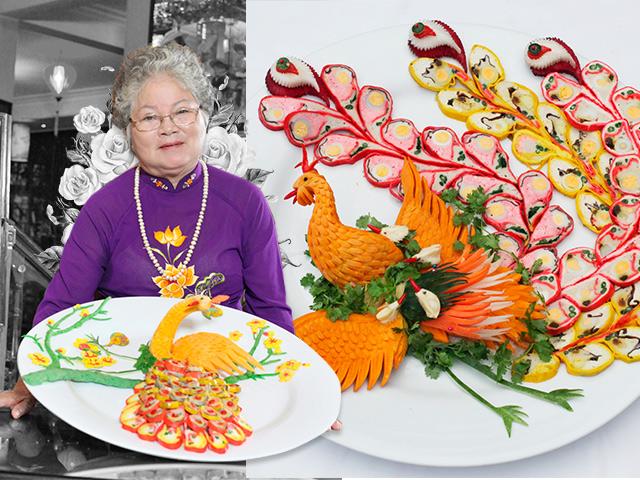
Coming to Hue, the first thing that each of us does is to find the dishes to enjoy and feel the remaining royal character somewhere through each taste. In fact, Hue royal cuisine is not much different from folk dishes in terms of ingredients. The most special feature lies in the delicate and meticulous presentation like a vivid art that attracts both the taste, hearing and sight of the user.
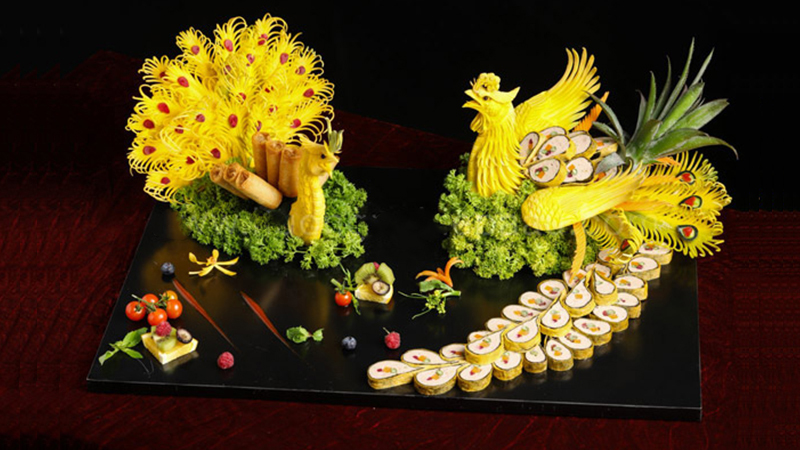
Hue royal food places great emphasis on decoration
History and Development of Hue Royal Cuisine
Hue royal cuisine is influenced by the cultural flows of many different communities during the period of reclamation and opening. It is the inheritance of the northern culinary style from the Ly dynasty (1069), the Le dynasty (1306) and especially from 1558, the Nguyen Lord and his entourage entered Thuan Hoa town. Or to add the cooking method of the Southern people from the Gia Long Dynasty. And Hue imperial cuisine is enriched with its own characteristics in ancient Champa cuisine.
With the brilliant development of the feudal dynasties and the residence of emperors, the duke duke in this ancient capital, has created sophisticated standards in the method of cooking. Hue food. Hue royal dishes at first were passed down from generation to generation. After the ambassadors returned, they offered the king strange and delicious dishes. Which special dishes will be listed on the list and then passed on to the next generation, just like that, Hue royal dishes become richer and more diverse.
When the feudal dynasty declined, royal cuisine began to be spread out and flourished on the basis of folk cuisine. Hue people process dishes very skillfully, with attractive colors, attractive presentation, and attach importance to "quality" over "quantity". Each dish has the yin-yang philosophy and profound human outlook of the people of the ancient capital. In particular, the harmony in spices or ingredients is focused so that the dish is not only delicious but also good for the health of the user.
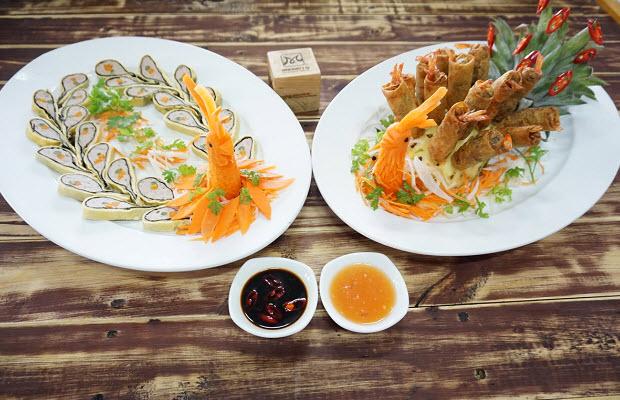
If you have the opportunity to enjoy dishes such as Hue spring rolls, sour shrimp - boiled meat, vermicelli, mussel rice, banh canh ... or some kind of banh beo, banh nam ... you will feel a bit of luxury and sophistication though. Made from very rustic ingredients.
Characteristics of Hue Royal Cuisine
When preparing royal dishes, the royal chefs often focus on seasoning many times to ensure the taste is just right, while keeping the freshness of the food. In addition to seasoning ingredients, the chef needs additional seasoning while the food is boiling. After turning off the heat, need to season again and lastly when serving on a plate, it must be seasoned again. A royal dish, when offered to the kings, must be seasoned no less than three times to ensure the dish has the best taste and the most richness.
There are many rules, rules, and rituals set out in Hue royal cuisine from food provision, processing, serving, table arrangement, dishes ... According to records, each meal of King Minh Mang, Dong Khanh, Khai Dinh must have from 35 to 50 dishes, of which there must be a few dishes of the bowl of pearls (the eight most precious dishes include: Cong rolls, phoenix pies, western ox, bear hands, venison , orangutans lips, elephant foot meat and bird's nest). Each dish was scooped into bowls and plates and placed in wooden boxes painted with yellow lipstick.
Hue royal rice tray
The meal is modeled on Hue imperial style
In the Hue court, there are many types of banquets and each form has its own menu. For example, the big feast of sacrifices has 161 qualities (dishes), the banquet has 50 dishes, the feast of pearls has 30 dishes, the first-class vegetarian feast has 25 dishes, the second-class vegetarian feast has 20 dishes. Besides, the raw materials used for processing must be of the first class, the specialties from many localities at home and abroad have increased.
All royal dishes must be beautifully decorated, compact, easy to pick up, and arrange dishes on trays, tables, plates and bowls, which must also have the rules of neatness, balance, harmony. in terms of color ... Hue royal cuisine is eaten with the eyes, by the nose, before eating by mouth. This is clearly shown through food plates decorated with delicate cut vegetables and fruits with vivid images, together with beautiful names.
Hue royal cuisine is the quintessential part of Vietnamese cuisine that should be honored, preserved and promoted. Because it is not only the art of cooking, but also hides the concept of life, philosophical thoughts and how to express the personality of Hue people in particular and Vietnamese people in general.